
Magento (Adobe Commerce) remains an actively maintained platform, despite periodic end-of-life (EoL) dates for specific versions or patches. Magento is not "out of life." It continues to receive regular updates from Adobe and feature contributions from its global community.
The platform benefits from a predictable release schedule, a growing ecosystem, and thousands of merchants and developers participating in community events each year. This article explains:
- How Magento's release cycles work
- What patch end-of-life actually means
- Why merchants don't need to rush upgrades within supported versions
- How Magento maintains a strong market position
- How Hyvä is driving steady growth in adoption
Understanding Magento Release Cycles and End-of-Life
Release Cadence
Adobe has defined a clear release schedule for Magento that balances predictable maintenance with continuous improvements.
-
Minor releases (e.g.
2.4) introduce new features. -
Patch releases (e.g.
2.4.7-p1) focus on security and quality fixes. - Each minor version typically receives ~3 years of regular support, with optional extended support for some Adobe Commerce versions.
| Version | Regular Support Until | Extended Support Until |
|---|---|---|
| 2.4.8 | April 11, 2028 | — |
| 2.4.7 | April 9, 2027 | — |
| 2.4.5 | August 9, 2025 | August 7, 2026 (Adobe Commerce) |
Table 1: Magento 2 support timelines for key versions. Source: Adobe Commerce lifecycle policy.
Note: Extended support is typically available for Adobe Commerce customers. Magento Open Source receives patches during the regular support window.
1.2 Monthly Patch Strategy (Starting 2026)
Note: Starting in January 2026, Magento will move to a monthly patch release cycle, ensuring faster delivery of security fixes and quality improvements.
The new strategy includes:
-
Monthly isolated security fixes
Non-cumulative patches released each month for all supported versions — including those in extended support.
-
Regular security patch releases
At least one cumulative security patch annually (around May), bundling all monthly fixes. A November release may be added if needed.
-
Annual full patch for the LTS branch
Magento 2.4.x is treated as a Long Term Supported (LTS) line, receiving one comprehensive patch per year (target: May), including security, quality, and performance improvements.
-
Beta releases (previews)
Twice-yearly beta patches (March and November) allow developers to test changes before General Availability.
This predictable schedule lets merchants align upgrade and maintenance windows with Adobe's cadence, reducing surprises and unplanned work.
Upgrading Smartly: No Rush Within Supported Versions
Merchants often ask whether they need to immediately upgrade to the newest version when it's released. The answer is usually: No, not if your current version is patched and supported.
For example, a merchant running Magento 2.4.7 with all security patches applied does not need to upgrade to 2.4.8
right away. Adobe issues security updates for all supported versions, including older minors like 2.4.7.
This approach allows merchants to stay secure without disrupting operations unnecessarily.
Key takeaway:
- Staying patched = staying secure.
- Plan upgrades on your timeline — don't rush.
- Align major upgrades with business priorities and Adobe's release calendar.
Magento's Market Position
Magento remains the most widely used professional open-source eCommerce platform globally. While SaaS solutions dominate parts of the market, Magento continues to hold a significant share among the top 1 million websites, underscoring its ongoing relevance for mid-market and enterprise merchants.
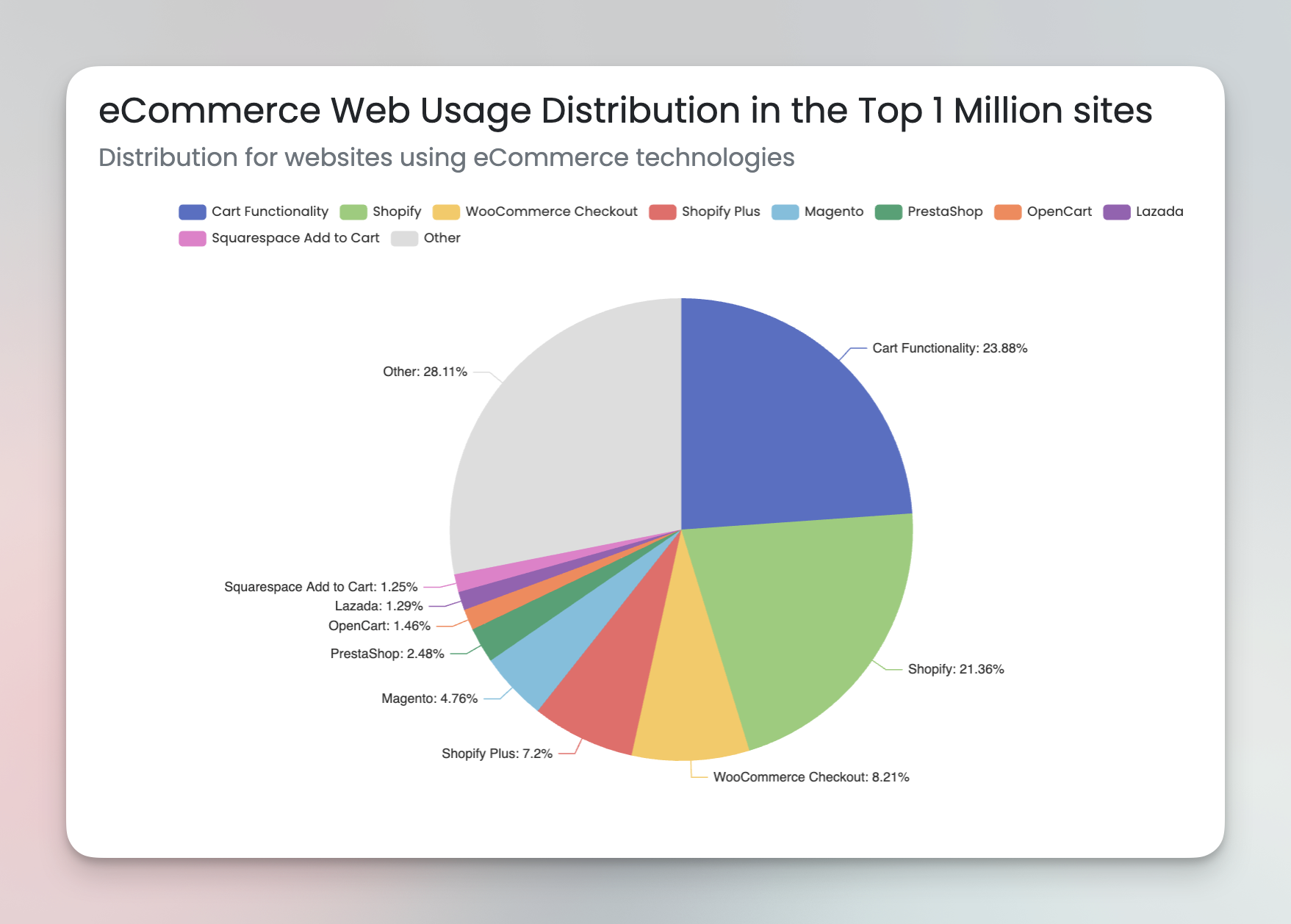
Magento remains the most widely used professional open-source eCommerce framework worldwide, maintaining a stable market share.
Hyvä Adoption: Driving Magento Growth
The Magento ecosystem continues to develop, driven in part by the adoption of Hyvä.
Hyvä dramatically improves Magento's frontend performance and developer experience, leading to rapid adoption across merchants and agencies.
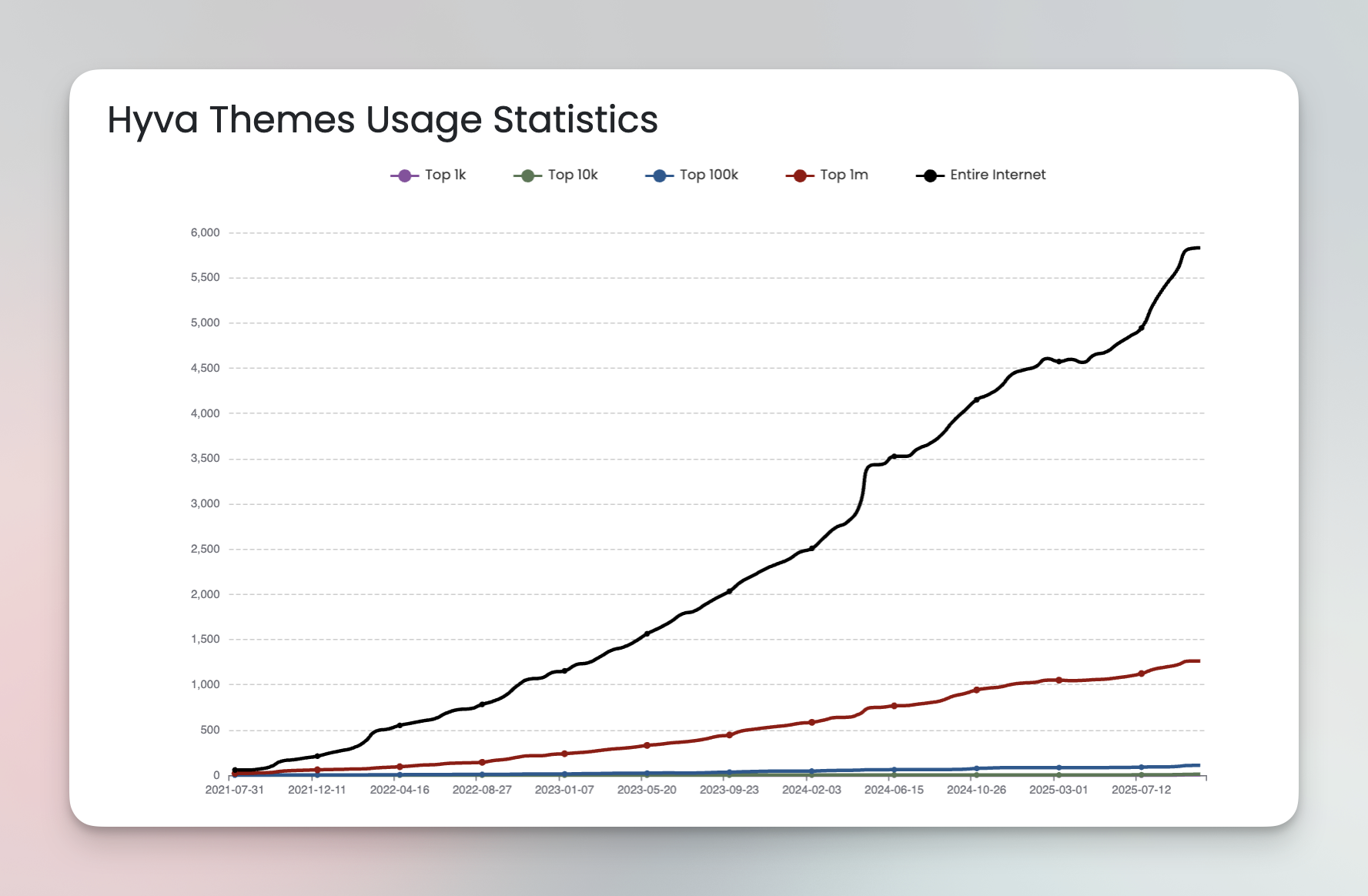
Hyvä usage has grown steadily since 2021, reinforcing Magento's growth trajectory.
Hyvä usage has grown consistently since 2021, and the broader community continues to ship meaningful tooling.
A Global Community
Magento's strength is amplified by its global community of merchants, developers, and contributors. Each year, thousands of people participate in events worldwide.
Meet Magento — Merchant & Business Focus
- Global conference series organized by the Magento Association and local partners.
- Emphasizes merchant stories, growth strategies, and new features.
- Events in dozens of countries attract thousands annually.
Mage Titans — Developer Focus
- Conferences "by developers, for developers."
- Deep technical sessions on architecture, performance, and modern frontend tools.
- Essential for staying ahead of Magento's evolving technical landscape.
Magento UnConference — Collaboration & Contribution
- Informal, participant-driven events.
- Attendees set the agenda on the day — focusing on collaboration, problem-solving, and contribution.
- Many official improvements and community initiatives are born here.
This ecosystem of events keeps knowledge flowing between merchants, agencies, and core contributors.
Conclusion
Magento's patch end-of-life announcements mark the retirement of specific versions, not the platform itself. With:
- A clear and accelerating release cadence
- A strong and stable market position
- Growing adoption through Hyvä
- An active global community
...Magento remains a well-supported professional open-source eCommerce platform.
Merchants who stay informed, apply patches consistently, and engage with the community can confidently build on Magento for years to come.